Old Style Vs New Style Mongolian Beef
Szechuan Beefiness vs Mongolian Beef
Szechuan beefiness vs Mongolian beef, what's the departure?
Szechuan beefiness has a sweet and spicy season, and Mongolian beefiness has a mild taste.
Szechuan beef hails from the Sichuan Province in southwestern Red china. Its master ingredients are chili peppers, garlic, and Szechuan peppercorn. Information technology has a sweet/spicy and complicated gustation. It is famous for the distinctive tingly numbing sensation it produces when eaten.
Mongolian beef hails from Taiwan and has no actual Mongolian origins. Its principal ingredients are flank steak, brownish sauce, and greenish onions. It has a mild and unproblematic taste.
Szechuan Beef vs Mongolian Beefiness Origins
You might be surprised by the origins of Szechuan beef and Mongolian beef. There is a lot backside these two seemingly simple dishes.
Szechuan Beef
Szechuan is non merely the proper noun of its corresponding beef dish. It is actually a type of regional cuisine.
Chinese cuisine is actually composed of viii traditional types of cuisines, and each cuisine corresponds to a unlike province in Cathay. These eight provinces are Anhui, Cantonese, Fujian, Hunan, Jiangsu, Shandong, Szechuan, and Zhejiang. These cuisine styles are an integral function of Chinese culture, and they are regarded as exemplars of Chinese cuisine. Even though most Chinese food in the US differs from its Chinese analogue, virtually all American Chinese food is derived from 1 of these eight traditional cuisine types.
Szechuan (as well known as Szechwan or Sichuan) originated from the Sichuan Province which is located in the southwestern part of People's republic of china. One of the key features of Szechuan cuisine is the prominence of chili peppers, garlic, and Szechuan peppercorns in its sauce.
Szechuan cuisine is the about consumed style of cuisine in China, and the Sichuan Province was acknowledged in 2011 by UNESCO for its renowned food civilisation. It was alleged a "Metropolis of Gastronomy." This is notable considering it was the first time that a city in Asia won that stardom. Even though Szechuan cuisine is clearly favored in China, globally Cantonese cuisine is much more pop.
Szechuan is famous for its distinctive numbing flavor which is called ma la in Chinese (which translates to "numbing hot"). This flavor is due to the Szechuan peppercorn which is not even a type of pepper! Information technology is a spice that is derived from the husks of seeds from prickly ash shrubs. The Szechuan peppercorn spice is derived from two species of the genus Zanthoxylum: Zanthoxylum simulans and Zanthoxylum bungeanum.
Szechuan peppercorn is not only the principal ingredient in Szechuan cuisine but one of the spices in the ever popular Chinese five-spice pulverisation. The other five spices are cinnamon, star anise, fennel, and cloves. Szechuan peppercorn is office of the citrus family which explains its citrusy taste, and its scent is considered to be comparable to the smell of lavender.
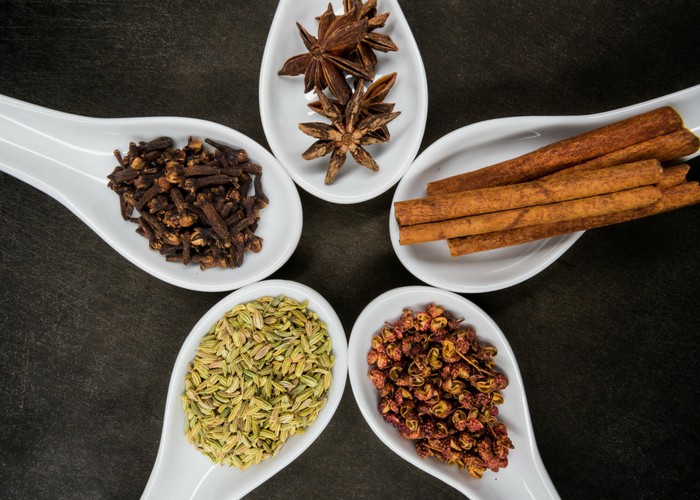
Szechuan cuisine has a diverse range of flavors which contribute to its complicated gustatory modality, and it can vary vastly in its level of spiciness.
Mongolian Beef
Traditional Mongolian cuisine, of form, originated in Mongolia, and it consists mainly of meats, animate being fats, and dairy products. Authentic Mongolian cuisine typically uses boiling and stewing.
However, Mongolian cuisine in Prc (or even the United states of america) is not even Mongolian!
Mongolian as we know information technology originated in Taiwan in the 1950s and was heavily influenced by the Japanese style of teppanyaki which was popular at the time. Teppanyaki is a style of Japanese cuisine that utilizes an iron griddle at very hot temperatures to cook nutrient. It actually has very little in mutual with authentic Mongolian cuisine from Mongolia.
In Communist china, Mongolian cuisine was thought to be luxurious, exotic, and containing a lot of meat. Therefore, a lot of dishes in China had Mongolian in the proper noun, only they were in no way related to Mongolian culture. So Mongolian beefiness is actually Taiwanese stir-fry!
Szechuan Beefiness vs Mongolian Beef Translation
Szechuan is the quondam romanization of Sichuan. And then while we even so refer to the food from that region equally Szechuan the correct romanization would be Sichuan. Sichuan translates to "four rivers." This is a reference to the 4 major rivers in Sichuan Province: Jialing, Jinsha, Min, and Tuo.
Mongolian relates to Mongolia (a landlocked sovereign state in East asia). China's Mongolian population is over double that of the actual state of Mongolia, and Chinese Mongols are called Měnggǔzú in pinyin.
Szechuan Beef vs Mongolian Beef Ingredients
Please annotation that for the remainder of this article the term Mongolian will be referring to the Chinese or American dishes and not actual Mongolian cuisine unless specified!
Szechuan-the almost common ingredients in Szechuan are sesame paste, ginger, and peanuts. Typically, Szechuan consists of chili paste, egg whites, cornstarch, rice, cooking vino, sesame oil, soy sauce, brown saccharide, cayenne pepper, sesame paste, Worcestershire sauce, crushed chili peppers, onions, peanuts, vegetable oil, minced ginger, carrots, and red bell peppers. Whew! That is a lot of ingredients for 1 dish. Szechuan definitely has a more complicated gustation!
Mongolian– the well-nigh common ingredients are sliced flank steak, brown sauce, and dark-green onions. Typically, Mongolian consists of hoisin sauce, chili peppers, soy sauce, scallions, cabbage, greenish onions, ginger, broccoli, and mushrooms. Mongolian has a much simpler taste than Szechuan.
Ingredient preparation
Szechuan relies on dried, pickled, and salted ingredients.
Mongolian relies on fresh ingredients especially green onions or scallions.
Taste
Szechuan focuses primarily on spiciness and heat. The signature of the dish is the sauce.
Mongolian focuses primarily on the meat and vegetables. The signature of the dish is the stir-fry method used to cook it.
Vegetables
Szechuan contains fewer vegetables and is less crunchy. Its crunch tends to come more from nuts like sesame seeds, cashew nuts, and salted peanuts.
Mongolian contains a lot more vegetables since it has fewer components and has a much crunchier texture.
Appearance
Szechuan usually has a sauce that is much redder in appearance.
Mongolian normally has a sauce that is night brownish in appearance.
Spices
Szechuan tends to be differing types of hot such as "hot and sweet" or "hot and sour." The hotness also has a different tingly awareness due to the Szechuan peppercorn used.
Mongolian tends to be mild and rarely uses spices. It is also has a lot more bodily sauce typically than Szechuan.
Szechuan Beefiness vs Mongolian Beef Preparation
Szechuan beefiness relies on stir-frying, braising, steaming, and marinating. The beef is marinated for a few minutes and is then cooked along with the other ingredients (including the marinade). Usually, all the ingredients, sauce, marinade, and beef are combined when offset cooked. Szechuan beef is typically served on steamed white rice.
Mongolian beef relies entirely on stir-frying. The beefiness and vegetables are always thinly sliced for quick cooking. Usually, all the ingredients, sauce, and beef are stir-fried in a large, round fe griddle or wok in oil or water at high temperatures. Mongolian beef is normally served on fried cellophane noodles just can besides be served on steamed rice as well. A fundamental point of cooking information technology on such a high temperature (above 500 degrees Fahrenheit) would exist that the beef is supposed to caramelize.
Szechuan Beef vs Mongolian in China vs the US
Even though Szechuan and Mongolian cuisine are available in both China and the US, there are still some differences when you compare them regionally.
Szechuan in Cathay typically uses beef, pork, tofu, and likewise rabbit. Rabbit is particularly popular in the Sichuan Province. In fact, more so than any other province in China. However, in the U.s. Szechuan is nearly always served with beef, pork, or chicken. The about notable difference between Chinese and American versions of Szechuan is that the American version is much milder than its Chinese equivalent.
Mongolian in Prc typically uses beefiness or lamb. In the US beef, pork, or craven are typically used. We likewise tend to characterization many Mongolian dishes as Mongolian barbecue even though they are not barbecued, and traditional Mongolian cuisine does not actually use barbecue cooking methods.
Many Chinese dishes and restaurants used the give-and-take Mongolian in their name to make the food seem more than exotic, and the US followed their instance. However, in China, these restaurants are standard pay and be served, and in the US most Mongolian restaurants are all-you lot-tin can-swallow buffet style.
Likewise, Mongolian in the US has fewer varieties of meats, ingredients, and sauces compared to their Chinese counterparts. Mongolian beef tends to be the aforementioned no matter where you eat information technology in the The states. The master departure in the US is that some restaurants serve their Mongolian beefiness mainly with green onions and others mostly with scallions.
Terminal Thoughts on Szechuan Beef vs Mongolian Beef
While many people retrieve that Szechuan beefiness is merely a spicier version of Mongolian beef, there is actually much more than to both of them than only their level of spiciness. It tin exist easy to misfile them with one some other, but if you just go on a few things in mind, it will be much easier to differentiate them.
Mongolian beef is stir-fried on a griddle or in a wok at high temperatures. It has more fresh vegetables, and the ingredients are always thinly sliced. It has a basic mild flavor and a thick brown sauce.
Szechuan beefiness can be cooked using unlike cooking methods. It also uses chilies mixed with Szechuan peppercorn as the distinguishing sauce ingredient. It has a complex spicy flavour and a thinner red sauce.
Other versus articles you might find interesting
Hunan Beef vs Szechuan Beef
Sushi vs Sashimi
Stromboli vs Calzone
Shallots vs Onions
Source: https://thisonevsthatone.com/szechuan-beef-vs-mongolian-beef/
0 Response to "Old Style Vs New Style Mongolian Beef"
Publicar un comentario